Home Services Doctors Gallery Contact Insurance & TPA Call 0184-2254040 Book Appointment
Synoptophore · Treat before age 8

Pediatric & Squint Care

Children rarely complain about their vision, because they have no way of knowing that what they see is not what everyone else sees. A child with one weak eye will seem completely normal.
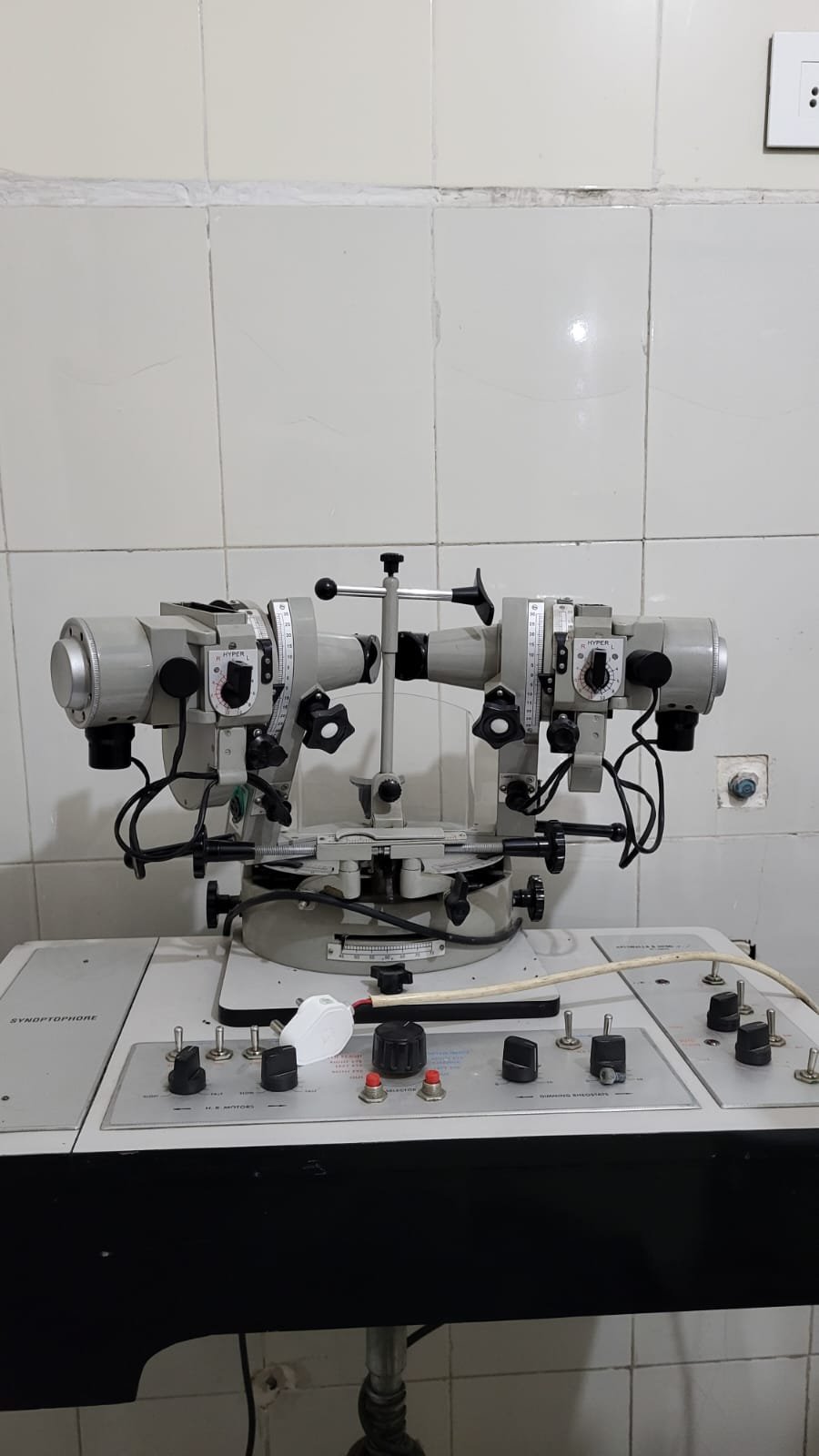
Synoptophore used for squint and binocular vision assessment, Karnal
Overview

There is a window, and it closes

A child's visual system is still developing. If one eye is not sending a clear image to the brain during the early years, the brain learns to ignore it — and after a certain age that becomes permanent.

Treatment that works easily at four often does not work at all at twelve. Vision develops through roughly the first eight years of life, and results decline sharply after that.

This is the whole reason to have a child's eyes checked even when nothing appears to be wrong.

What's Included

Your care at a glance

Squint (strabismus)

Eyes that do not point the same way — not something children reliably grow out of.

Lazy eye (amblyopia)

Reduced vision in a healthy eye the brain has learned to ignore.

Synoptophore assessment

Measures the exact squint angle and trains the eyes to work as a pair.

What to watch for

Eyes that do not appear to point in the same direction, even occasionally. A head turn or tilt adopted to see better. Closing one eye in bright light or when concentrating. Sitting very close to the television, or unexplained difficulty at school.

How it is treated

Glasses are sometimes the whole treatment. Patching the stronger eye forces the weaker one to work. Orthoptic exercises build coordination. Surgery is used where the alignment itself needs correcting. The treatment follows the diagnosis.

When to have a child's eyes checked

  • Around age 3 — the first full assessment for most children.
  • Again before starting school, ahead of reading and board work.
  • In infancy, where there is a family history of childhood eye disease.
  • Any time you or a teacher notices something.
FAQ

Questions about pediatric & squint care

Generally no, and waiting is risky. A persistent squint will not correct itself and carries a real risk of permanent lazy eye. It should be assessed rather than watched.

Far younger than most parents expect — we can assess eyes in infancy. Testing does not require a child to read letters or answer questions.

No. Glasses alone are sometimes enough. Patching, exercises and surgery are all used depending on the cause.

We schedule children's appointments so they are not rushed. Most find the synoptophore and picture-based tests more interesting than alarming.

Book Your Visit

Book your consultation

Talk to our team about pediatric & squint care — we'll assess your eyes and explain your options clearly. No pressure, just honest advice.

📞 Call 💬 WhatsApp Book Appointment